

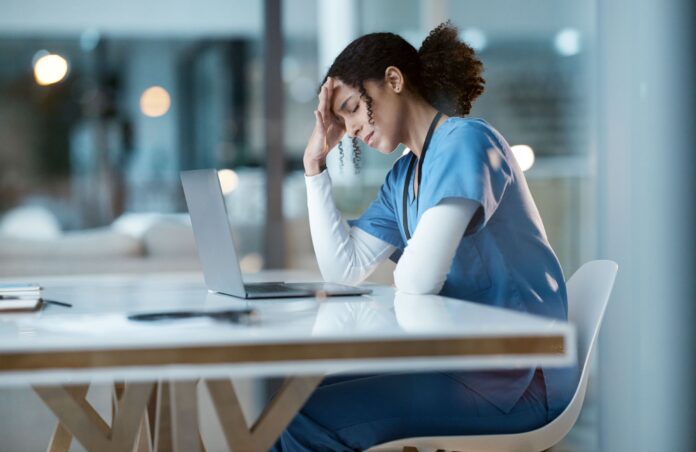
Frontline workers are being priced out of the housing market as the cost of buying a home or renting a property spirals to unprecedented highs in Queensland.
Most nurses, police officers, childcare workers and teachers can’t afford to buy or rent on their own in southeast Queensland, based on their income and the median price of houses and apartments.
“Most of southeast Queensland is a ‘no-go zone’ for frontline workers hoping to get their foot on the property ladder,” Property Council of Australia Queensland director Jess Caire said.
The council on Monday released a report, Beyond Reach, which shows that if you are a single-income critical worker on an average salary of $85,000 buying a house is “beyond hope” and buying a unit is “beyond reach”.
Even for a dual income household, buying a home is unaffordable.
Brisbane is now the second-most expensive city in Australia to buy a home, according to data released by CoreLogic earlier this month.
Scroll down to SUBSCRIBE for our FREE news feed, direct to your inbox daily.
The median house value in the Queensland capital is $937,479, and $615,429 for a unit.
The overall value of Brisbane dwellings has risen sharply against Melbourne in the past four years, at 59.8 per cent compared to 11.2 per cent, respectively.
Ms Caire said a council report released in 2007 foreshadowed the grim outlook for housing costs currently impacting much of Australia.
It predicted Queensland would face “a housing crisis of dire proportions” without policy solutions that addressed development assessments, land supply and infrastructure for population growth areas.
But that warning fell on “deaf ears”, Ms Caire said.
“Housing is more expensive than it needs to be, red tape is making it more difficult to deliver, and the slow pace of infrastructure delivery has made it harder to unlock new sites,” she said.
Premier Steven Miles, however, argued escalating house and rental prices is something the government has been concerned about for some time.
“We really need essential workers to be able to live close to where they work,” he told reporters on Monday.
Instead, he spruiked existing policy to ease the pressure, like subsidising infrastructure charges for developers building high density units near train stations so critical workers can commute.
Mr Miles said there were significant land releases and approvals already underway but the delay in construction had been building costs, supply chain and workforce pressures.
The government will meet with the Property Council next week to discuss proposals to aid more frontline workers into home ownership.
Opposition Leader David Crisafulli who responded to the report at a press conference at Maroochydore on Monday, said it showed how dire the housing situation had become in Queensland.
“When we’ve reached the point that frontline staff are unable to live in the areas they serve, you know that the crisis has deepened to levels the likes of which we never thought we’d see in this stage,” he told reporters.
“These people are the glue that holds their communities together.”
Mr Crisafulli lobbed blame on the state government for causing the crisis by failing to unlock more supply to meet demand, promising to do more if his party wins the October election.
Do you have an opinion to share? Submit a Letter to the Editor at Sunshine Coast News via news@sunshinecoastnews.com.au. You must include your name and suburb.



