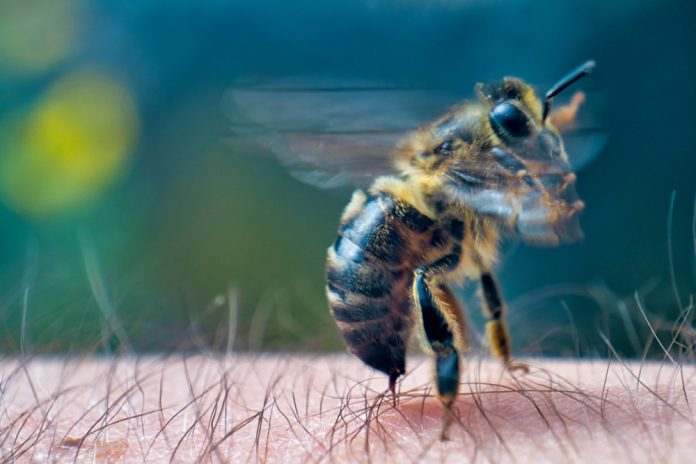
Of all Australia’s creepy crawlies, slithering snakes and cursed crocs, it’s the humble bee which sends the most locals to hospital each year.
The Australian Institute for Health and Welfare crunched national hospital data for the 2017/18 period and found more than 920 hospitalisations were caused by bee stings, most of which were due to allergic reactions.
This made up more than a quarter of the 3500 hospitalisations nationwide caused by contact with a venomous animal or toxic plant.
Flinders University-based AIHW spokesman James Harrison attributed the data to bees’ close proximity to large human settlements such as cities.
The most venomous snakes and spiders, meanwhile, may be more dangerous than bees but also live in remote areas where few humans reside.
“It’s largely that people tend to live where bees tend to be – there’s just a lot more potential for contact,” Professor Harrison said.
Of the 19 people who died in Australia in the 2017/18 financial year due to venomous bites and stings, 12 were caused by bee and wasp stings, AIHW found.
Meanwhile, spider bites accounted for a fifth of hospitalisations, or 666 cases, with redback spiders responsible for almost half of these incidents.
Venomous snakes accounted for more than 600 hospitalisations, or 17 per cent of the total, with more than a third attributed to the brown snake.
The other seven of the 19 bite-related deaths in 12-month period were due to snakes.
Elsewhere, contact with venomous marine animals caused just under 400 hospitalisations, 80 per cent of which were due to stinging fish like stonefish.
Prof Harrison said the highest rate of bite-related hospitalisations per capita was in the Northern Territory, and the lowest in the ACT.
Those who live in very remote regions of Australia were also five times more likely to be hospitalised due to a venomous bite than city dwellers.
Australia is home to 20 of the world’s 25 most venomous snakes.
“It’s not a bad idea for people to have some awareness of the sorts of venomous animals they share the environment with, and that differs in different parts of the country – (there are) different animals in Tasmania compared to Far North Queensland,” Prof Harrison said.
VENOMOUS BITE-RELATED HOSPITALISATIONS IN AUSTRALIA, 2017/18:
- More than 3500 hospitalisations in total
- 927 hospitalisations due to bee stings (26 per cent)
- 666 hospitalisations due to spider bites (19 per cent)
- 606 hospitalisations due to snake bites (17 per cent)
- Just under 400 hospitalisations due to venomous marine animal bites
- 12 deaths due to bee and wasp stings
- Seven deaths due to snake bites
(SOURCE: AIHW)