
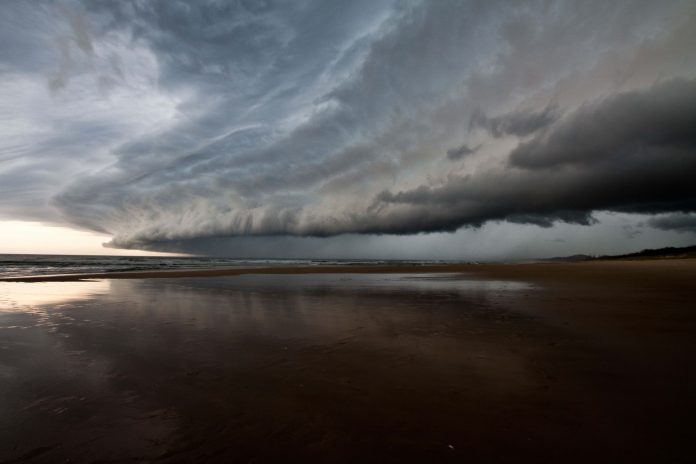
Spring has finally sprung after a bitterly cold and seemingly wet winter, but a long-range forecaster has warned there is ferocious weather coming.
Hayden Walker, a fourth-generation forecaster and son of world-renowned weather expert Lennox Walker, has revealed his spring predictions in an exclusive analysis for Sunshine Coast News.
And he says the months ahead could be “savage”, featuring flash flooding, cricket ball-sized hail and intense lightning strikes.
Looking even further down the line to summer, there’s also the likelihood of a cyclone forming in the far north and central Queensland in February or early March.
Mr Walker said southeast Queensland should prepare for a “savage storm season”.
It would begin with storms in September which will intensify in October, possibly ripping off roofs.
“The first 10 days of September will see unsettled conditions to the south-east and also extending to the southern border and inland divisions,” predicted Mr Walker.
“During the month, storm activity will commence for the spring and will be mainly to the southern border areas including the south-east.”
Mr Walker said October would bring strong winds to the south coast.
“Storm activity will intensify for the southern border areas and will be more widespread reaching to the central and highlands and parts of the far north coast.
“Storm activity will be intense with strong winds, lightning strikes, large hail the size of cricket balls and flash flooding to the south-east.
“A low-pressure system will also form towards the end, fuelling rainfall to the area, including northern New South Wales.”
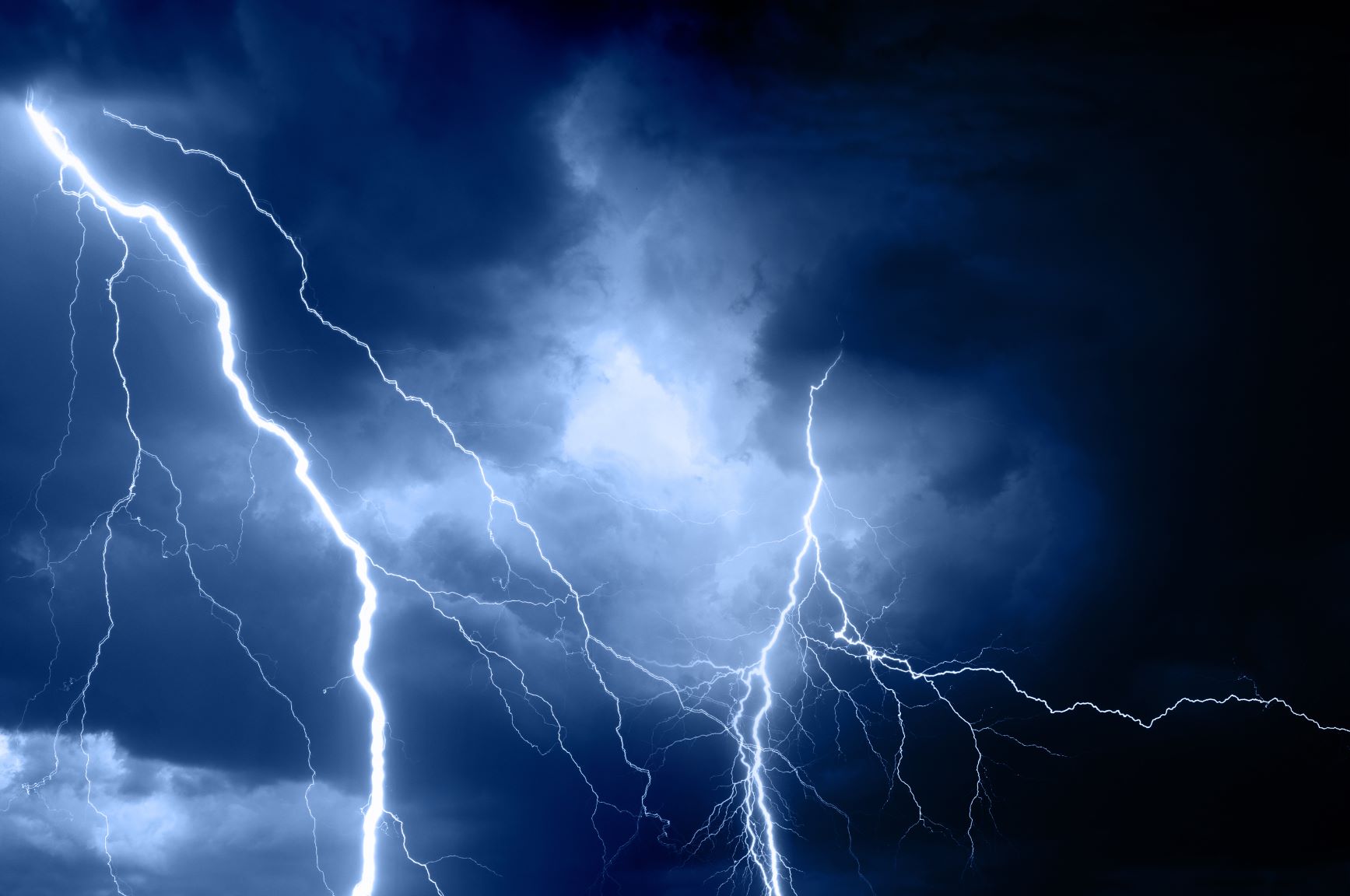
Towards the end of spring, as the weather warms up, Mr Walker said the storms would be “ferocious”.
“During November further storm activity will be frequential and ferocious throughout the state,” he warned.
“The south-east will experience further storm activity and will be very intense at times.
“Strong winds, flash flooding, large hail and intense lightning strikes will be experienced especially to the south-east.
“Another low will make its presence to the south-east and also extend to the Northern Rivers.”
Mr Walker also touched on summer, predicting more storms and flooding for the state and low pressure systems, which are known to bring persistent rain, affecting the coast.
“The main cyclone for the season will be during February and may extend to early March for the far north and central coasts,” he said.
How it works
Hayden uses his knowledge of the sun, combined with patterns of sunspot activity and energy flow, to predict both the short and long-term future of weather worldwide, specialising in long range forecasts.
The sun has an ever-changing surface which accommodates large sunspots emitting solar radiation or magnetic fields, which react with the Earth’s magnetic field.
This causes a reaction with the poles, thus producing Northern Lights. An increase in sunspot activity, especially during a Solar Maximum, gives rise to weather extremes, such as flooding, cyclones and storms.
The reverse happens during a Solar Minimum, or a dormant period, when we experience droughts.
Hayden has been successful in predicting many major weather events – such as the cyclones Larry, Yasi, Marcia and Olwyn, flooding to the NSW coast during April 2015 and recent storm activity in Queensland and NSW.
He was the only long-range weather forecaster to predict Cyclone Oswald that brought heavy rains to New South Wales and Queensland, especially the floods to Bundaberg.
INFORMATION: haydenwalkersweather.com.au